Part of this change was a result of an effort to reduce emergency rental costs during the busy season. “With our old provider, it wasn’t uncommon to have multiple days where we had to have rentals because two or three lifts were out of action,” Smith says.
Part was also the fact that today’s lift trucks, like today’s cars, are increasingly sophisticated, computer-controlled machines. It now takes technicians, rather than mechanics, to keep them running. “As the technology evolved, it became increasingly difficult for a general repairman to make an adjustment to get a lift truck back into service,” says Smith.
Reducing costs
While uptime is of paramount importance, Scotts’ fleet management program is playing an emerging role in the company’s efforts to manage its distribution and supply chain costs.
For example, the program includes the planned maintenance of specific components based on hours of use. It also includes a certain percentage of unplanned maintenance for certain components, up to a negotiated price threshold.
At the moment, Scotts is realizing two financial benefits from the program, according to Chute, the senior buyer who is responsible for purchasing the lift truck fleet.
The first is that Scotts has better control over its rental costs during the peak season. That’s not just the cost of renting lifts because a Scotts-leased truck is out of commission. Rather, Scotts is able to make informed decisions about when to lease versus rent a unit to meet peak demand. “We can lease a truck for about 25% less than we can rent a truck,” Chute says. “However, we don’t need all those trucks all year long. So, it’s important that we are fully utilizing our leased fleet to minimize how much we spend in rentals. The information we’re getting from the fleet management program helps us strike the right balance.”
The second benefit is that Toyota offers a better residual rate to lessees who use the fleet management program. “We’re able to offset part of the cost of the maintenance programs by lower lease payments,” Chute says. “Toyota is willing to do this because they believe in the program.”
Going forward, Chute intends to utilize the fleet and repair data in several new ways to further reduce costs. They include:
• Right size fleets and optimize leases: In the past, Scotts has leased all of its lift trucks for 48 months/2,500 hours. In the future, Chute wants to use the operational data to make sure it is fully utilizing all of its vehicles. If not, Scotts can take steps to right size the fleet or rewrite leases to reflect actual usage.
• Quantify the benefits of planned maintenance: “In the past, we have been reactive. We fixed things when they broke,” says Chute. “With planned maintenance, we are being proactive.” Scotts is in the process of extending the program to its other plants. The next step is to implement a third-party maintenance software tool to aggregate and compare data across facilities. “We see the value in the program,” Chute says. “However, we need the data to prove that it’s saving us money.” Chute also plans to use the data to compare operational costs across facilities. This may identify best practices in one facility that can be implemented in other facilities. “We have the same vehicles and the same operations across the company,” he says.
• Identify opportunities for operator training: Scotts assigns specific lifts to specific operators. As part of the fleet management programs, it receives a performance chart that identifies the repairs to each vehicle. “One of the things we want to identify is what are we spending on planned maintenance versus unplanned maintenance or repairs that are the result of how the truck is used,” says Chute. “We hope to be able to identify the operators that could benefit from further training.”
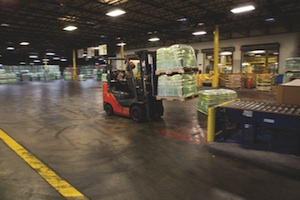
Most important of all, say Chute and Smith, the program ensures that Scotts gets the most value from its materials handling equipment. “A lift truck is the tool of the trade in our facilities,” says Smith. “When a driver is on it for 8 or 12 hours a day, you want that truck to have the necessary power and performance when it’s needed. Our fleet management program is getting the job done for us.”







 粤公网安备 44010602003952号