At Linde Material Handling (LMH), truck design has developed over a long period of time to become a key compone...
At Linde Material Handling (LMH), truck design has developed over a long period of time to become a key component of the brand. As early as 1985, the business achieved its first recognition in the shape of an iD Design Award for the good design of its diesel truck family. To date, almost twenty further prizes have followed for very diverse range of truck models. Certain factors have continued to define the image of Linde trucks over the years: revolutionary technical vehicle concepts, customer benefits and the partnership with Porsche Engineering, which enters its 30th year this year.
This partnership with one of the world's most prestigious design service providers runs through the entire development process from the concept phase to the development phase, including design planning, right up to finalization and production optimization. At Europe's largest forklift truck manufacturer, there is no demand for design elements that do not have relevant benefits or superficial style. "We much prefer the philosophy of 'form transports function'. The design should visualize the technical and ergonomic qualities of Linde industrial trucks and make them come alive", says Ralf Dingeldein, Vice President of New Trucks at Linde Material Handling.
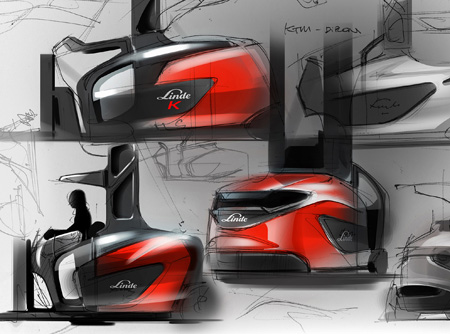
Each product sends a visual message through its design concept. This applies for forklift truck in the same way as for sports cars. "For example, the dynamic, low silhouette of the truck with its long wheelbase and characteristic rear suggests comfort and performance, and means that the driver does not sit on the truck, but is protected inside it", emphasizes Dingeldein. The external and internal appearance of the Linde industrial truck has been subject to a noticeable process of evolution. If the shapes and contours up to the introduction of the 39x diesel and LPG truck family in 2002 could be considered soft, they have since been sharpened. And this design characteristic has since run through all industrial trucks introduced from the Linde counter-balanced trucks to the Linde reach trucks, and from the Linde pallet truck to the new Linde K very narrow aisle truck. They all have a distinctive V-shape with a sloping rear.
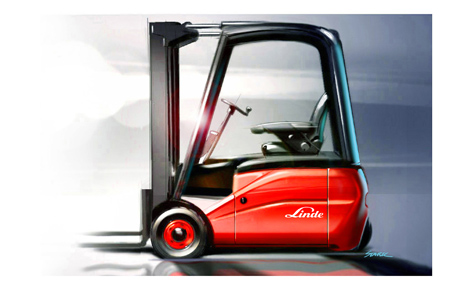
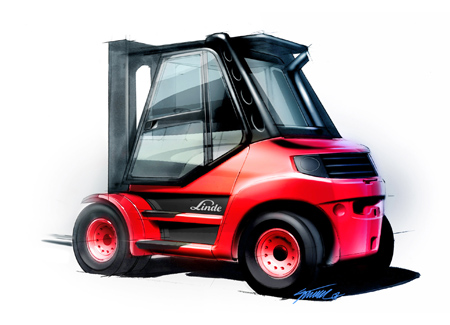
At the start of a design process, there is always a brainstorming period involving two-dimensional sketch. This brainstorming period is followed by a period of collaboration between design engineers and designers, during which the truck concept is further developed and becomes more detailed, resulting in a 1:1 scale model. Development steps, technical feasibility and the influence of these factors on design are tested on an ongoing basis using prototypes, with a focus on a consistent overall concept for the design model or prototype. The final, optimised design is then scanned and prepared as two-dimensional data on the computer for tool making.
![]()
N 201203 Linde and Porsche_E16C
![]()
N 201203 Linde and Porsche_H
![]()
N 201203 Linde and Porsche_K






 粤公网安备 44010602003952号