Cascade’s Fork Safety Program:One of the keys to safe lift truck operations begins with inspecting your forks f...
Cascade’s Fork Safety Program:
One of the keys to safe lift truck operations begins with inspecting your forks for wear and damage. Forks will last a long time if treated properly, but since they can look as good when they are worn as when they are new, it’s critical to know how to inspect them to determine if they are safe.
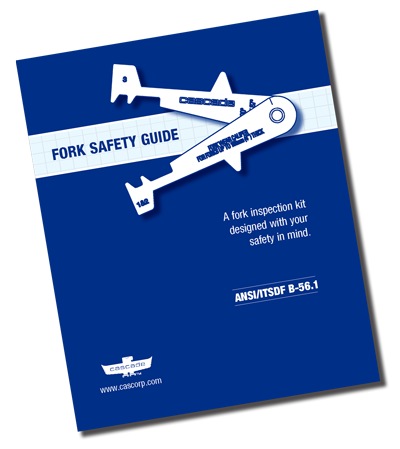
As a part of Cascade’s philosophy to promote safety, we have created a Fork Safety Kit consisting of a Fork Safety Guide and Fork Wear Calipers to ensure your components comply with the law and are safe for use. We encourage frequent, periodic inspection of forks and other critical forklift components as a part of an active work place safety program. The Fork Safety Guide is patterned after the ANSI/ITSDF B-56.1 Fork Wear Standards. Contact Cascade for those forks that do not comply with the Fork Wear Standards.
For more information about how to use your Fork Caliper for routine fork safety inspections, visit our Fork Inspection page at www.cascorp.com or watch this helpful video.
Fork Tips:
Since forks carry larger loads than most lifting devices, if mistreated or neglected, they could be dangerous. The following are some examples of mis-use and what to avoid so forks are not damaged in the course of daily work:
Do not overload forks by picking up a load too far out on the forks or by picking up loads heavier than the truck rating.
Do not allow maintenance shops to bend forks back into shape, weld on them or drill holes through them.
Avoid adding attachments to the truck that stress the forks.
Do not use forks to open rail car doors or to break loads out/away from other loads.
Though drum clamps and portable booms can be supported on the forks, be aware of what is contained in the drum or on the boom hook.
Forks should not be used to pick up capacity loads not seated against the fork shank or to pick up off-balanced loads far from the side of the truck.
Avoid inserting the fork tips under other fork trucks to lift them during maintenance operations.
If a collision with building columns or walls occurs, even if the forks show no discernible bend, check to ensure they have not been damaged beyond the safety guidelines.
Do not apply excessive heat to any part of a fork (during repair, for instance).
Remember to also inspect the hooks that secure the forks to the lift carriage.
![]()








 粤公网安备 44010602003952号